Doctrine of Separation of Powers
The major questions doctrine works. The doctrine of separation of powers in todays context of liberalization privatization and globalization cannot be interpreted to mean either separation of powers or checks and balance or principles of restraint but community of powers exercised in the spirit of cooperation by various organs of the state in the best.

The Doctrine Of Separation Of Powers In India Usa And France
When these principles are written down into a single document or set of legal documents those documents may be said to embody a written constitution.
. The Framers experience with the British monarchy informed their belief that concentrating distinct governmental powers in a single entity would subject the nations people to arbitrary and oppressive government action. A constitution is the aggregate of fundamental principles or established precedents that constitute the legal basis of a polity organisation or other type of entity and commonly determine how that entity is to be governed. In some matters the Constitution gives the.
La doctrine de Locke tout comme celle de Montesquieu par la suite nest pas celle dune véritable séparation des pouvoirs et ce pour deux raisons. Independent journalism investigating todays national and international issues. Le pouvoir législatif doit être clairement séparé des autres pouvoirs mais les pouvoirs exécutif et confédératif.
In Article I the People vested all federal legislative powers. The Doctrine of Separation of Powers a vintage product of scientific political philosophy is closely connected with the concept of judicial activism. His publication Spirit of the Laws is considered one of the great works in the history of political theory and jurisprudence and it inspired the Declaration of the Rights of Man and.
Separation of powers is a doctrine of constitutional law under which the three branches of government executive legislative and judicial are kept separate. And furthermore it is a. The nation subscribes to the original premise of the framers of the Constitution that the way to safeguard against tyranny is to separate the powers of government among three branches so that each branch checks the other two.
The doctrine may be traced to. - It is a feature of the peculiarly British conception of the. The course is based on the 2014 AP US.
The Governor-Generals reserve powers. Lord Mustill in R vs Home Secretary Ex parte Fine Brigades Union1 defined the doctrine of separation of powers in England as. And judicial branches of government are not to infringe upon each others constitutionally vested powers see also nondelegation doctrine.
In terms of the Constitution the NDPP is the authority mandated to prosecute crime while the Commissioner of Police is the authority mandated to manage and control the SAPS. In India the fountain-head of power is the Constitution. Recent issues have arisen however with respect to states use of private parties to enforce state anti-abortion regulations such as Texass Senate Bill 8 S.
The doctrine of Separation of Powers deals with the mutual relations among the three organs of the Government namely legislature Executive and Judiciary. This is also known as the system of checks and balances because each branch is given certain powers so as to check and balance the other branches. The Dormant Commerce Clause or Negative Commerce Clause in American constitutional law is a legal doctrine that courts in the United States have inferred from the Commerce Clause in Article I of the US Constitution.
Government and Politics curri. Learn More About separation of powers. The doctrine happens to form the basis of the entire structure of the constitution.
His publication Spirit of the Laws is considered one of the great works in the history of political theory and jurisprudence and under his model the political authority of the state is. Separation of powers division of the legislative executive and judicial functions of government among separate and independent bodies. To protect the Constitutions separation of powers.
It is part of the relationships of a particular type of legal system. Such a separation it has been argued limits the possibility of arbitrary excesses by government since the sanction of all three branches is required for the making executing and administering of laws. It is no longer an isolated doctrine taken up when political advantage makes it expedient and put off when no longer needed.
In contrast the presidential communications privilege is another. Deliberative process privilege is a specific instance of the more general principle of executive privilege. 8 and as to state legislatures claims of near-plenary powers over federal.
Separation of powers refers to the division of a states government into branches each with separate independent powers and responsibilities so that the powers of one branch are not in conflict with those of the other branches. As a general rule the nondelegation doctrine prohibits the Legislative Branch from delegating its lawmaking. A legislature an executive and a judiciary which is sometimes called the trias politica model.
The term Separation of Powers was coined by the 18th century philosopher Montesquieu. A well-known concept derived from the text and structure of the Constitution is the doctrine of what is commonly called separation of powers. It is usually considered to be based upon common law rather than separation of powers and its history traces back to the English crown privilege now known as public-interest immunity.
Separation of powers is a political doctrine originating in the writings of Charles de Secondat Baron de Montesquieu in The Spirit of the Laws in which he argued for a constitutional government with three separate branches each of which would have defined abilities to check the powers of the othersThis philosophy heavily influenced the writing of the United States. The term trias politica or separation of powers was coined by Charles-Louis de Secondat baron de La Brède et de Montesquieu an 18th century French social and political philosopher. I section 1 of the constitution denotes the legislative authorities in the Congress.
The term trias politica or separation of powers was coined in the 18th century by Charles-Louis de Secondat baron de La Brède et de Montesquieu. The doctrine of the separation of powers is embedded in this examination of cause and effect in the political system. Il y a seulement une distinction entre des pouvoirs qui collaborent.
Separation of powers is a model that divides the government into separate branches each of which has separate and independent powers. The primary focus of the doctrine is barring state protectionismThe Dormant Commerce Clause is used to prohibit state legislation that. The principle of the separation of powers is that in order to prevent oppressive government the three powers of government should be held by separate bodiesthe Legislature Executive and Judiciarywhich can act as checks and balances on each other.
The doctrine of Separation of Powers-The constitution of USA. The issue of state separation of powers generally is not one that the federal courts have had much occasion to address. The typical division is into three branches.
The doctrine of separation of powers precludes the courts from impermissibly assuming the functions that fall within the domain of the executive. Background It is safe to say that a respect for the principle of separation of powers is deeply ingrained in every American. Has accepted and is making use of the doctrine of separation of powers.
In 50 videos Craig Benzine aka WeezyWaiter teaches you US. The meaning of SEPARATION OF POWERS is the constitutional allocation of the legislative executive and judicial powers among the three branches of government. Separation of Powers is embedded in the Indian Constitutional set up as one of its basic features.
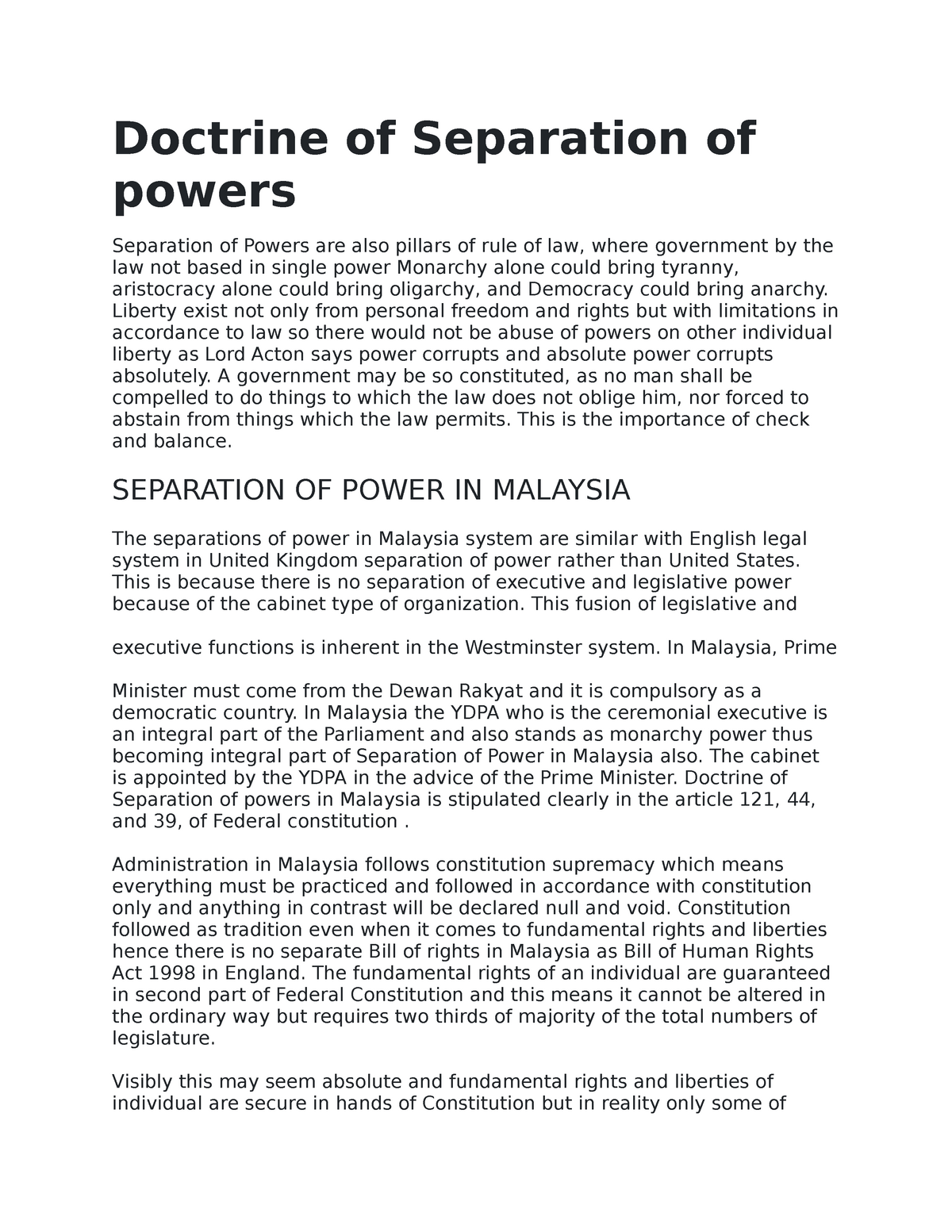
Doctrine Of Separation Of Powers Doctrine Of Separation Of Powers Separation Of Powers Are Also Studocu
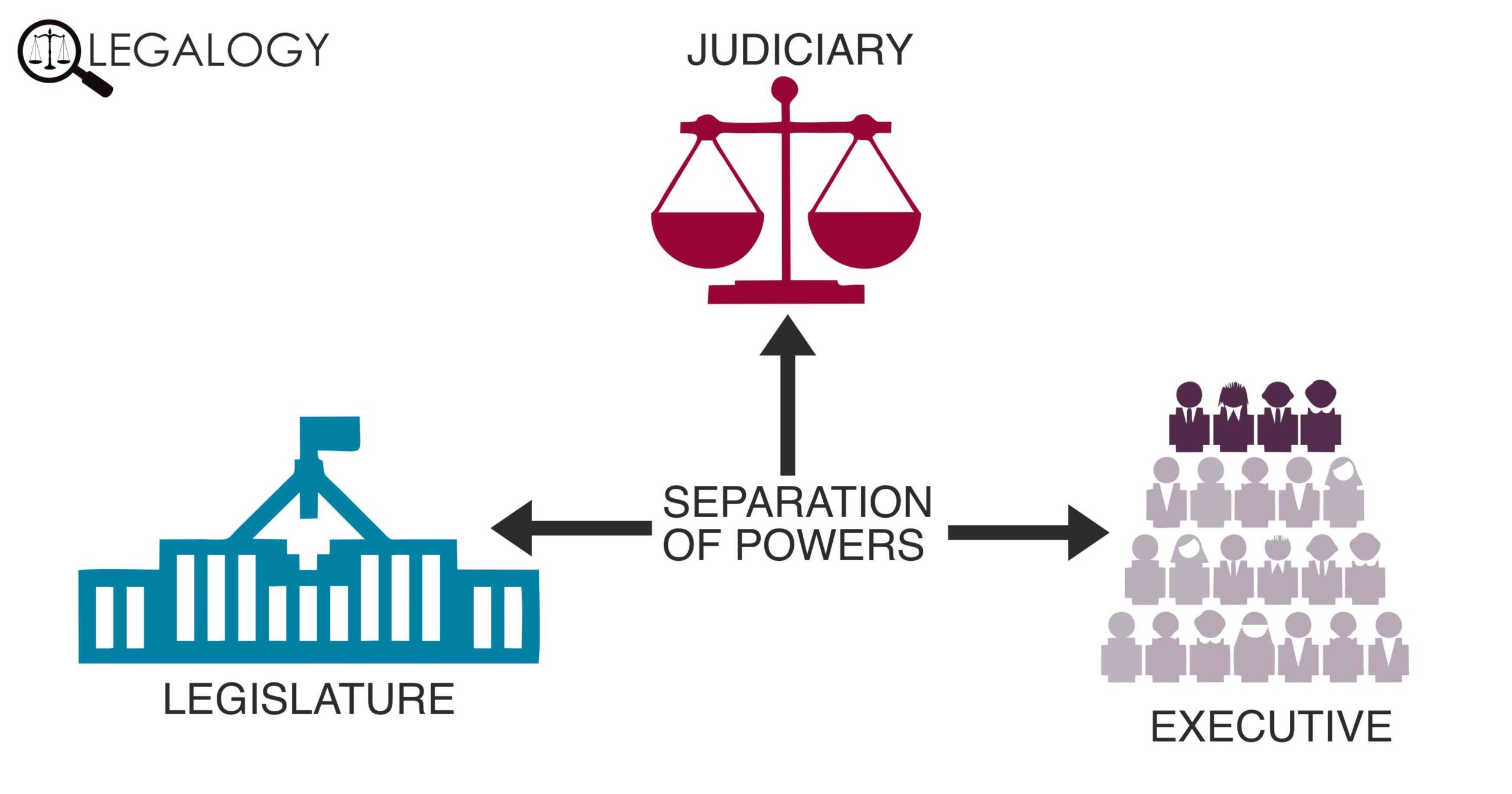
Doctrine Of Separation Of Powers Legalogy

Doctrine Of Separation Of Powers

Doctrine Of Separation Of Powers Lawlex Org

Theory Of Separation Of Powers
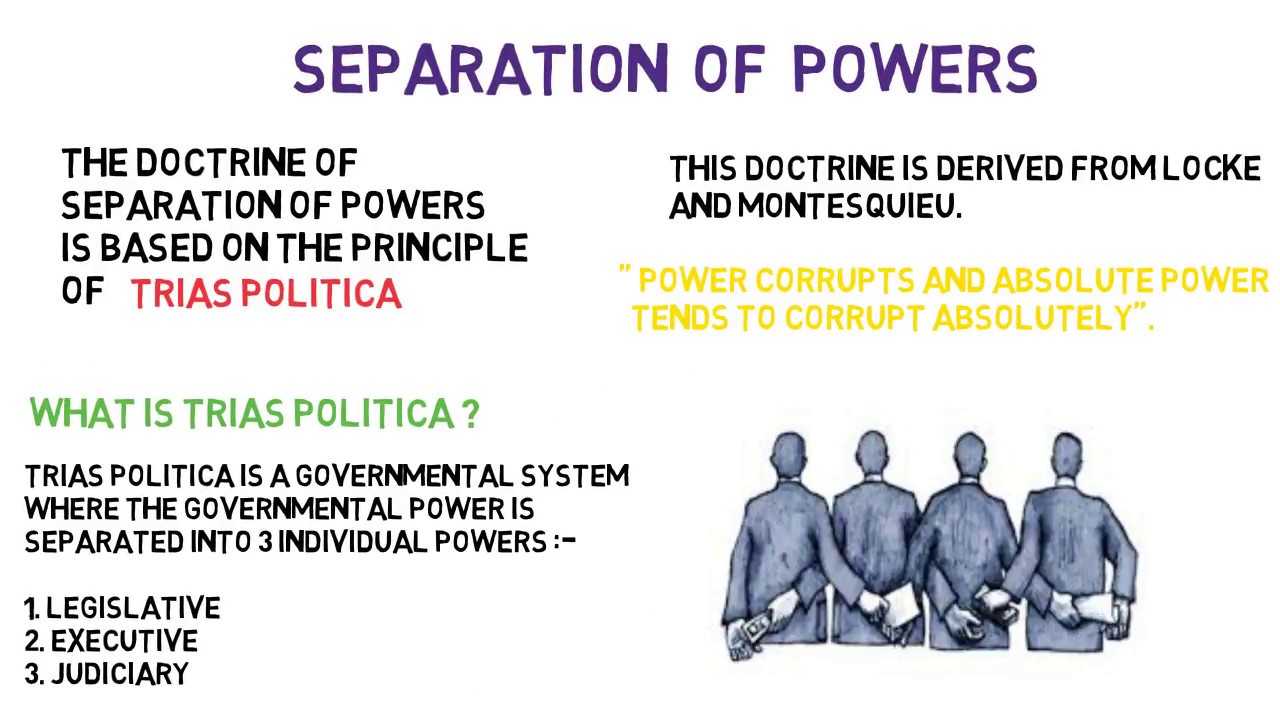
Separation Of Powers Youtube
0 Response to "Doctrine of Separation of Powers"
Post a Comment